Introduction: A New Era of Growth Has Begun
The way businesses connect with people has changed forever. Audiences no longer respond to loud promotions or one-size-fits-all messaging. They expect relevance, value, and meaningful interaction at every touchpoint. This shift has created a massive opportunity for brands willing to evolve and a serious challenge for those that resist change.
Modern digital marketing has become the engine behind this transformation. It blends creativity with data, technology with human emotion, and strategy with storytelling. More importantly, it gives businesses of every size the power to compete, grow, and build long-term trust.
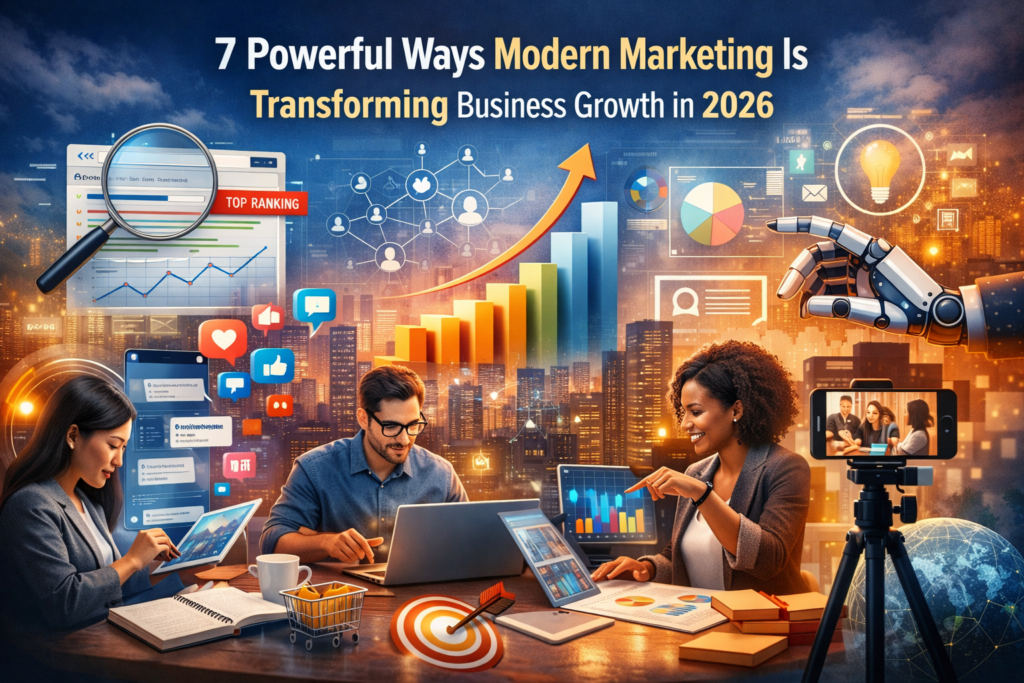
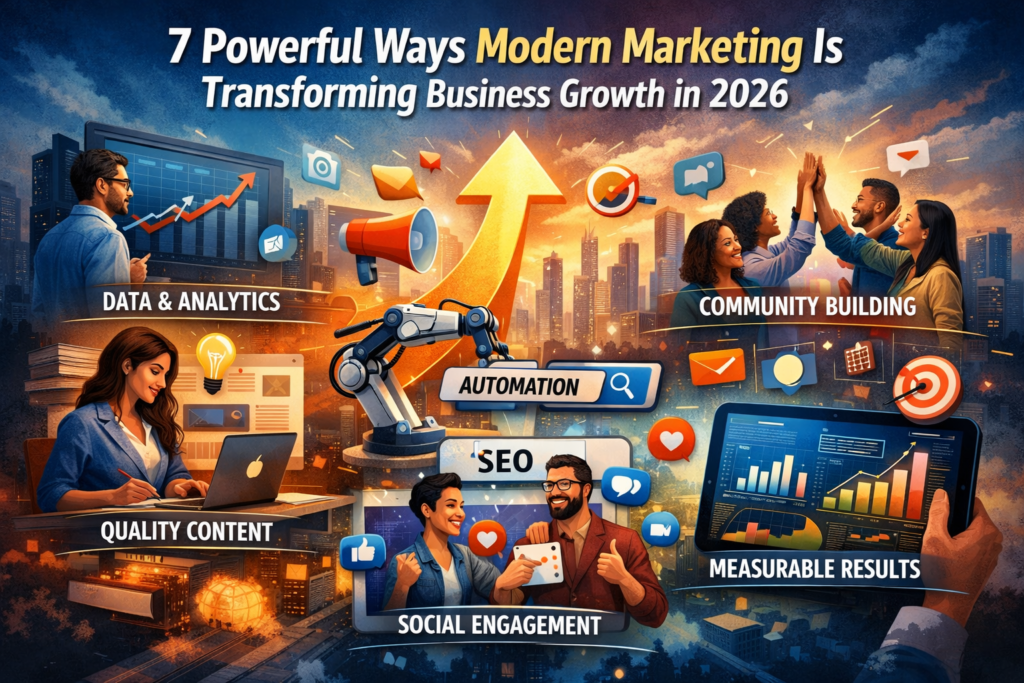
In 2026, success is no longer about who spends the most money. It’s about who understands their audience best, adapts fastest, and delivers consistent value across platforms. This article explores seven powerful ways modern marketing strategies are reshaping business growth, helping brands move from visibility to credibility and from clicks to loyalty.
https://shubdigital.site/blog/
1. Audience-First Thinking Is Replacing Traditional Promotion
One of the most positive shifts in recent years is the move away from product-centric promotion toward audience-centric communication. Businesses are no longer asking, “How do we sell this?” Instead, they are asking, “What problem are we solving?”
Today’s successful campaigns are built around customer intent. Brands analyze behavior, preferences, and pain points before creating content or launching ads. This leads to more relevant messaging, higher engagement, and stronger emotional connections.
When businesses truly understand their audience, marketing stops feeling like marketing. It becomes helpful, informative, and even inspiring. This mindset shift alone has dramatically improved trust and long-term brand value across industries.
2. Data Is Driving Smarter, More Confident Decisions
In the past, marketing decisions were often based on assumptions and gut feeling. Now, real-time insights guide almost every move. Performance metrics, behavioral data, and predictive analytics allow businesses to understand what’s working and what’s not — instantly.
This data-driven approach reduces waste and increases efficiency. Campaigns can be optimized mid-flight instead of waiting until budgets are exhausted. Content strategies evolve based on engagement trends, not guesswork.
The real win, however, is confidence. When decisions are backed by evidence, teams can innovate faster, scale smarter, and justify investments with clarity. Data has transformed marketing from a cost center into a measurable growth engine.
3. Content Quality Is Finally Winning Over Quantity
For years, brands believed that publishing more content meant better visibility. In 2026, that myth is officially dead. Audiences are overwhelmed, algorithms are smarter, and only high-quality content earns attention.
Successful brands now focus on depth, relevance, and originality. Instead of chasing trends blindly, they invest in thought leadership, practical guides, and storytelling that reflects real expertise.
This shift benefits both businesses and consumers. Readers get valuable insights instead of recycled noise, and brands build authority rather than chasing short-term traffic spikes. Quality content also compounds over time, continuing to deliver value long after it’s published.
4. Automation Is Enhancing, Not Replacing, Human Creativity
Automation has become one of the most misunderstood elements of modern marketing. Many fear it removes the human touch, but in reality, it enhances it when used correctly.
Automated workflows handle repetitive tasks like email sequences, audience segmentation, and performance tracking. This frees marketers to focus on strategy, creativity, and relationship building.
Personalized messaging at scale is now possible without sacrificing authenticity. When automation is guided by empathy and insight, it creates smoother customer journeys and more meaningful interactions. Technology becomes a support system, not a replacement for human connection.
5. Search Visibility Is About Value, Not Tricks
Search engines have evolved dramatically. Keyword stuffing and shortcuts no longer work. What wins today is genuine value.
Brands that prioritize helpful content, strong site experience, and clear intent alignment consistently outperform competitors. Search visibility now rewards clarity, trustworthiness, and relevance rather than manipulation.
This evolution has leveled the playing field. Smaller businesses with expertise and consistency can outrank larger brands that rely solely on authority or budget. When marketing aligns with user needs, search performance becomes a natural outcome, not a forced tactic.
6. Social Platforms Are Becoming Community Spaces
Social media is no longer just about broadcasting messages. It has evolved into a two-way conversation and, increasingly, a community-building tool.
Brands that engage, listen, and respond build stronger relationships than those that simply post promotional content. Authenticity matters more than polish. Audiences value transparency, humor, and honesty.
In 2026, social success comes from participation, not domination. Businesses that treat platforms as spaces for dialogue rather than advertising channels create loyal followers who advocate organically. Community has become one of the most valuable assets a brand can build.
7. Measurable Impact Is Redefining Success
Perhaps the most powerful transformation is how success is measured. Vanity metrics are losing importance, while meaningful outcomes take center stage.
Instead of focusing only on impressions or likes, businesses track engagement quality, conversion paths, customer lifetime value, and retention. This shift aligns marketing efforts directly with business goals.
When impact is clearly measured, teams gain clarity and direction. Budgets are allocated more effectively, strategies become more focused, and leadership sees marketing as a strategic driver rather than an expense.
The Positive Ripple Effect on Businesses
The combined effect of these changes is profound. Businesses are more agile, more customer-focused, and more resilient. Marketing teams collaborate better with sales, product, and customer support. Growth feels intentional rather than accidental.
Small startups can compete with established players. Niche brands can thrive without massive budgets. Most importantly, customers benefit from better experiences, clearer communication, and brands that actually listen.
This evolution has turned marketing into a long-term investment instead of a short-term gamble.
Challenges Still Exist — and That’s a Good Thing
Despite all the progress, challenges remain. Privacy regulations are stricter. Competition is intense. Attention spans are shorter. But these challenges push the industry to improve.
They encourage ethical practices, smarter targeting, and more meaningful content. They reward brands that respect their audience instead of exploiting them. In many ways, these challenges are shaping a healthier, more sustainable ecosystem.
Growth in 2026 belongs to businesses willing to adapt, learn, and put people first.
The Future Outlook: Sustainable, Smart, and Human
Looking ahead, the most successful strategies will balance technology with empathy. Artificial intelligence, predictive analytics, and automation will continue to advance, but human insight will remain irreplaceable.
Brands that succeed will be those that stay curious, test continuously, and remain audience-obsessed. They will focus on building trust, not just traffic. They will value relationships over reach.
Modern digital marketing is no longer about chasing attention. It’s about earning it.
Conclusion: Growth With Purpose
The transformation happening right now is not temporary. It’s a fundamental shift in how businesses grow and connect with people. By embracing audience-first thinking, data-driven decisions, quality content, and authentic engagement, brands are creating sustainable success.
The positive news is clear: marketing has matured. It’s smarter, fairer, and more human than ever before.
Businesses that align with these principles won’t just survive in 2026 — they’ll lead.
https://shubdigitalind.blogspot.com/2026/02/social-media-marketing-strategies-in.html
